Snorkeling in Corsica: top 5 of the best diving spots
Underwater beauty
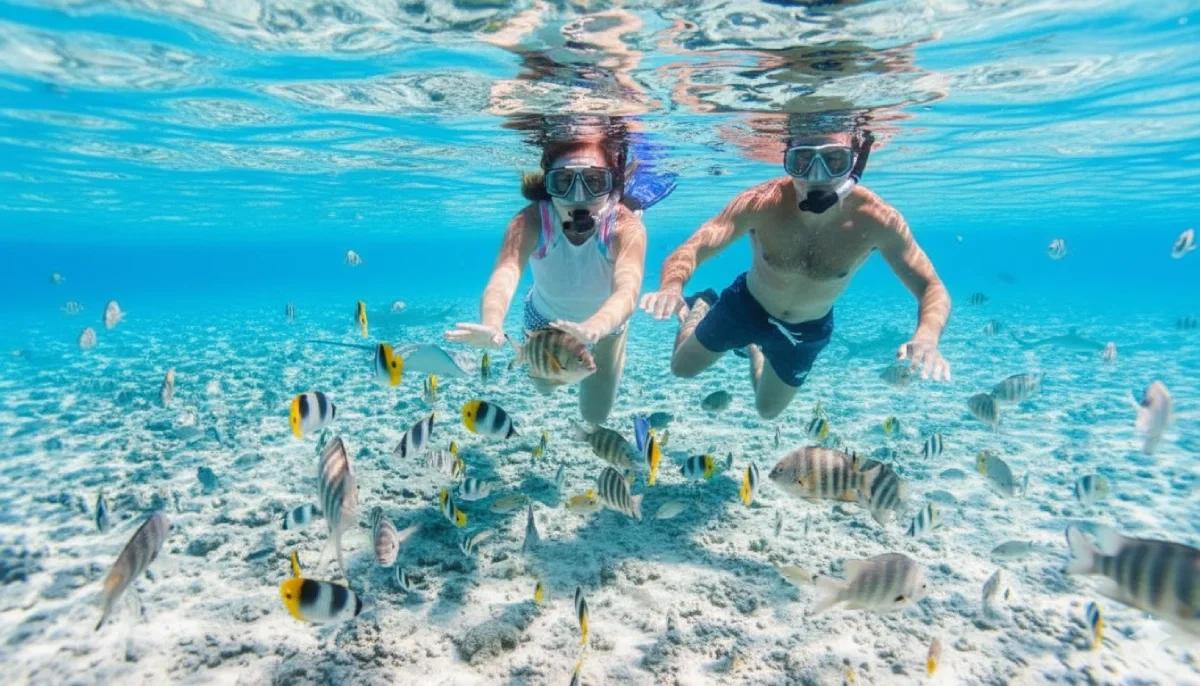
Corsica is a true paradise for snorkeling enthusiasts. The island boasts a rocky coastline, perfectly suited to snorkeling and underwater exploration. Between wild coves, beaches and small islets, there are countless spots to admire marine life, especially near our campsite in Ghisonaccia, ideally located for exploring the Regional Natural Park of Corsica, where marine biodiversity is particularly well preserved. You already have your fins, mask and snorkel ready and can’t wait to dive into the crystal-clear waters of Corsica to discover a rich and diverse marine fauna and flora? Just a moment—first, discover the best snorkeling spots in Corsica to fully enjoy the underwater wonders of the Island of Beauty.
The best snorkeling spots in Corsica
Marine exploration
You already have your fins, mask and snorkel in hand and can’t wait to dive into the crystal-clear waters of Corsica to discover a rich and diverse marine fauna and flora? Just a moment—first, discover the best snorkeling spots in Corsica, so you can fully enjoy the underwater wonders of the Island of Beauty.
1. The Lavezzi Islands
Crystal-clear waters
Located south of Bonifacio, between Corsica and Sardinia, the Lavezzi Islands are a true snorkeling paradise. This stunning Corsican archipelago, home to the Natural Reserve of the Bouches de Bonifacio, features three highly popular snorkeling spots for fans of fins, mask and snorkel:
Cala Achiarina
This is the most well-known spot in the Lavezzi Islands. Follow the marked trails from the landing pier to reach some of the best fish-viewing areas in this part of Corsica.
Cala della Chiesa
The beautiful underwater formations and the rich marine life of this snorkeling spot—one of the least crowded in the archipelago—make it a favorite among diving enthusiasts.
Cala di u Grecu
Marine life is abundant around the rocks of this easily accessible spot. To reach the Lavezzi Islands, take a boat from Bonifacio, located 85 km from our campsite in Corsica.
Which fish can you observe?
In this well-preserved area, fish are accustomed to human presence. During your dive, you may spot Mediterranean rainbow wrasse, black seabream, peacock wrasse, red mullet, painted comber, gilthead seabream and blennies. In deeper water, you may also encounter Mediterranean salema and red starfish.
2. The Gulf of Porto
Red cliffs
North of Ajaccio, on the west coast of Corsica, the Gulf of Porto is a UNESCO World Heritage Site. It is a true giant aquarium for snorkeling enthusiasts. You will dive into deep, dark waters, surrounded by spectacular red granite cliffs.
Which fish can you observe? Keep your eyes wide open—you may be lucky enough to spot rays, barracudas, sea urchins, damselfish, as well as painted combers and black wrasse. As for the flora, you will swim among Posidonia seagrass meadows, Spirograph worms and Dalmatian nudibranchs.
3. The beaches of Porto-Vecchio
Turquoise lagoons
Few seaside resorts can boast beaches as paradisiacal as those of Porto-Vecchio. Turquoise water, pine trees lining the shore, rocks in the sea and white sand give Porto-Vecchio’s beaches a true postcard-like atmosphere. For snorkeling, head to the most beautiful beaches of this Corsican town, located about 50 kilometres from your seaside campsite in Corsica:
Santa Giulia Beach
Dive near the rocky reef covered with algae and Posidonia seagrass. Marine life here is rich and diverse, and thanks to the shallow water, you can even spot fish right from the shoreline.
Palombaggia Beach
Start your underwater exploration from the large rock and swim around the rocky areas and Posidonia meadows. You’ll enjoy a wonderful introduction to Mediterranean marine life. Palombaggia Beach is undoubtedly one of the best snorkeling spots in Corsica.
Which fish can you observe?
If you take the time to explore the rocky walls, you may come face to face with octopuses and moray eels. In the Posidonia meadows, you’ll find Mediterranean salema, peacock wrasse and pipefish. Around the rocks, admire Mediterranean rainbow wrasse, purple stingrays and painted combers. Finally, keep a close eye on the sandy seabed, where soles and comb stars skillfully camouflage themselves.
4. Cap Corse
Wild seabeds
Cap Corse forms the northernmost tip of the island and is also an excellent destination for snorkeling in Corsica. Fans of fins, mask and snorkel particularly favour the following spots, considered among the best on the island:
Marine de Negru
At the foot of the cliffs, a rocky area shelters rarer species, making it the perfect place to observe fish you won’t see elsewhere. As the water is deep, this snorkeling spot is reserved for experienced snorkelers. Avoid snorkeling here in rough seas or with a westerly wind.
Marine d’Albo
The distinctive feature of Albo Beach is the Genoese tower overlooking a rock on the southern side. At the foot of the tower, along the rocks, lies a remarkable snorkeling spot.
Here too, being a confident snorkeler is essential to fully enjoy the underwater beauty of this part of Corsica.
Which fish can you observe?
Be patient if you hope to spot a thornback ray, a brown grouper or a common dentex. Seabream, damselfish, Mediterranean rainbow wrasse and painted combers are much more common and therefore easier to observe. As for the flora, take time to admire peacock’s tail algae (Padina pavonica), dictyota algae and various red algae.
5. The Scandola Nature Reserve
Protected biodiversity
Another must-see snorkeling spot in Corsica is the Scandola Nature Reserve. This site, listed as a UNESCO World Heritage Site, is accessible only by sea, and several areas are closed to swimming and diving. Book a boat excursion departing from the Gulf of Porto, including a snorkeling stop, to admire the unique biodiversity of this well-preserved Corsican site.
Which fish can you observe? Numerous rare species inhabit the waters of this exceptional area, including brown meagre, common dentex, brown grouper and corb.
As for flora, you’ll be amazed by red calcareous algae (Phymatolithon calcareum), Lithophyllum rims and impressive coral formations spread across the seabed.
How to prepare for a snorkeling session in Corsica
Practical tips
What equipment do you need for snorkeling in the Mediterranean Sea?
To enjoy snorkeling in Corsica under the best conditions, having the right equipment is essential. Fins, mask and snorkel allow you to move easily on the surface of crystal-clear water and observe the seabed freely. Depending on the season and the water temperature, a light wetsuit can provide extra comfort, especially during long swimming sessions near rocks, reefs or rocky beaches.
When is it safest to go snorkeling in Corsica?
The best time for snorkeling in Corsica runs from May to October, when the sea is calm and underwater visibility is optimal. Early mornings are recommended, as the water is usually clearer and marine activity more limited. Checking the weather forecast, sea conditions and avoiding areas exposed to strong winds will help you fully enjoy Corsican beaches, coves and islets in complete peace of mind.
Observing fauna and flora while snorkeling
Marine life
Iconic fish you can spot while snorkeling in Corsica
Corsican seabeds are home to a rich marine fauna that is easy to observe while snorkeling. Depending on the spot, you may encounter wrasses, seabream, damselfish, Mediterranean salema and painted combers swimming around rocky areas. In the most well-preserved zones, it is not uncommon to come across octopuses, moray eels or rays, especially near reefs and seagrass meadows.
Posidonia seagrass meadows and Corsican seabeds
True lungs of the Mediterranean Sea, Posidonia seagrass meadows play a vital role in maintaining the balance of marine ecosystems. During a snorkeling session in Corsica, they provide a remarkable natural setting and serve as shelter for many marine species. Their presence is a clear indicator of water quality and greatly enhances the richness of underwater landscapes visible from the surface.
Snorkeling in Corsica: a natural immersion accessible to everyone
A unique experience
Accessible, fun and full of discoveries, snorkeling in Corsica is a must-do activity to explore the marine biodiversity of the Island of Beauty. Between beaches, wild coves, natural reserves and turquoise waters, each outing offers a unique immersion into the heart of the Mediterranean seabed. To extend the experience, enjoy accommodation in eastern Corsica within our holiday village in Corsica, ideally located for exploring the coastline, with the comfort of our fully equipped mobile homes in Corsica or the charm of our holiday villas in Corsica, for a stay combining nature, relaxation and freedom.